Composite fencing blends recycled wood fiber with plastic polymer to create a fence material that looks like real wood grain but resists the fading, splintering, and rot that come with actual lumber over time. It sits at a price point between standard wood and premium vinyl, and it's become a popular middle-ground choice for LA-metro homeowners who want the visual warmth of a wood fence line without the recurring maintenance.
We typically recommend composite fencing to homeowners who've owned a wood fence before and are tired of the staining cycle, but who find solid-color vinyl too stark or uniform-looking for their property's style — composite's embossed wood-grain texture and earth-tone color range (cedar, walnut, and gray-brown tones are most common) reads considerably closer to real lumber than smooth vinyl does, particularly at close range. It's also a common choice for properties in HOA communities where design guidelines call for a “natural wood appearance” but the HOA or homeowner wants to avoid wood's maintenance requirements.
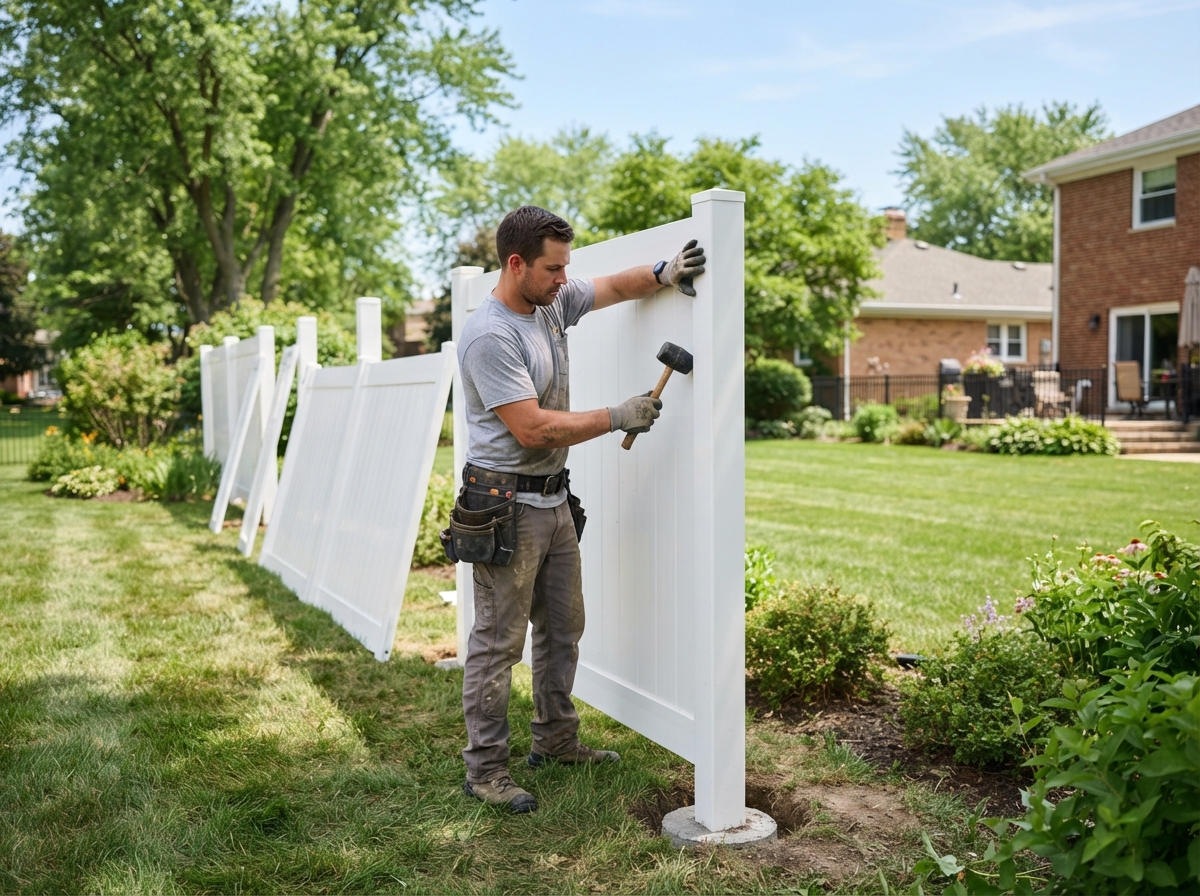
Composite panels are heavier than vinyl and are typically installed using an aluminum or composite frame system rather than simple post-and-rail construction, which adds rigidity but also means composite installation requires more precise post spacing and footing work than either wood or vinyl. We measure and lay out every post location before digging to confirm frame panels will fit without field-cutting, since composite doesn't cut and re-finish as cleanly as wood if adjustments are needed after the fact. Footings are sized for the added panel weight compared to vinyl. Most residential composite fence installations run slightly longer than a comparable vinyl job — typically two to three days — due to the additional precision required in post layout and frame assembly. Color and dye-lot consistency across a full order is also something we verify at delivery, checking panels against each other before installation begins, since composite — like real lumber — can show slight tone variation between production runs.
Benefits
- Realistic wood-grain texture without wood maintenance
- Fade- and stain-resistant in high-UV exposure
- Earth-tone color range: cedar, walnut, gray-brown
- Reinforced frame system for added rigidity
- Often meets HOA “natural wood appearance” guidelines
Composite Fencing Installation Questions
Composite typically costs more per linear foot than standard wood or vinyl privacy fencing, reflecting the reinforced frame system and manufacturing process. We'll provide a direct cost comparison across materials during your on-site estimate.
Composite requires far less upkeep than wood — no staining or sealing — though an occasional rinse to remove surface dirt and pollen helps maintain its appearance. It does not need refinishing.
Get a Free Composite Fencing Installation Estimate
Licensed, insured, and ready to schedule your on-site assessment.